
Meeting the New ADA Title II Deadline: Why Regulatory and Policy Content Is the Blind Spot
State and local governments have a new deadline for ADA Title II web accessibility. Entities with a population of 50,000 or more now need to comply by April 26, 2027. The technical standard itself hasn't changed, and WCAG 2.1 Level AA still applies to web content and mobile apps.
The real challenge here isn't awareness, since most agencies already know accessibility matters. It's scale. Thousands of PDFs, legacy Word documents, and guidance materials need to stay legally formatted while also becoming accessible, and manual remediation simply can't keep up with that volume. Waiting until the deadline gets closer only adds risk.
Meeting the new standard means building accessibility into the regulatory and policy process itself, instead of trying to fix things after a document has already gone out the door.
The Real Blind Spot: Regulations and Policies, Not Just Web Pages
Agencies tend to treat ADA compliance as a website problem, running scans, remediating PDFs, refreshing navigation, and updating public pages. But the content agencies produce most, and rely on most, often turns out to be the least accessible: regulations, policies, standard operating procedures, and guidance documents.
Even agencies that have invested heavily in web accessibility often leave this content untouched. Word documents get built with headings that look right visually but aren't tagged for a screen reader. PDFs get exported without any tagging at all, so they read as one big image with nothing for assistive technology to interpret. Older versions keep circulating internally and externally long after they've been replaced. Over time, that gap tends to show up as ADA and WCAG violations, citizen complaints, audit findings, confusion among staff and field teams, and a slow erosion of public trust.
Why This Matters
Regulations and policies are infrastructure. They shape how programs run, how staff make decisions day to day, and how residents actually access services. When that content isn't accessible, the effects ripple outward. Citizens read inaccessible regulations and policies as a sign of a government that isn't being transparent with them. Staff end up working from outdated guidance because nothing is centralized or clearly versioned. Audits become fire drills because proof of approvals and prior versions is scattered across inboxes and shared drives instead of living in one place. And remediating PDFs after they're published never addresses why the content was inaccessible to begin with.
Why Legacy Workflows Make This Hard
Even agencies that run their operations smoothly tend to run into the same handful of structural problems. Headings get applied for visual effect rather than tagged with real semantic structure, which breaks screen readers right away. PDFs get exported without tagging, turning them into images that assistive technology can't read. Every division ends up with its own templates and its own way of publishing, so standards vary depending on who's producing the document. Legal formatting requirements sometimes conflict with WCAG readability guidance, which forces agencies into a false choice between meeting statutory formatting and meeting accessibility standards. And without a single source of truth, there's rarely a clear owner or a clear path to fixing any of it.
None of this comes down to people not caring or not trying. It's a problem with the infrastructure itself, and it needs a fix at that level.
A Framework for Accessible Regulatory and Policy Management
A few principles make up a workable framework here. Draft, approved, and archived regulations and policies should live in one authoritative library rather than scattered across systems. Templates and publishing workflows should apply accessibility rules automatically, instead of leaving it up to whoever happens to be writing the document that day. Source documents can keep their required legal formatting while an accessible HTML version is generated in parallel for public and staff use, so agencies aren't forced to choose between the two. Content should be structured and searchable enough that residents using assistive technology can actually navigate it. Proof of acknowledgment and update history should be available on demand rather than reconstructed after the fact. And accessibility needs to be part of the publishing workflow itself, not something remediated one document at a time after it's already live.
How Esper Supports Regulatory and Policy Content That's Ready for ADA
Esper is built for large, collaborative government agencies, and accessibility is part of the core workflow rather than something added on top. Agencies keep their original DOCX file exactly as written, which satisfies statutory formatting requirements. At the same time, Esper generates an accessible HTML version in parallel that's structured, readable, and works well on mobile. Because there's one source of truth, staff are always working from the latest approved version instead of guessing which copy is current. Smart Search lets employees and residents ask natural language questions and get answers backed by citations. Publishing workflows apply structure, metadata, and readability standards consistently across the agency, regardless of who authored the original document, and every version, approval, and attestation is tracked automatically so audit prep isn't a last minute scramble.
The result is accessibility that scales without forcing agencies to rebuild their library from scratch or maintain two competing formatting standards side by side.
What's Changing Across State Government
More agencies are connecting the dots between accessibility, transparency, compliance, staff efficiency, and resident trust. Accessible regulations and policies aren't a nice to have anymore. They're becoming both a public expectation and a leadership priority, and agencies that get ahead of it now tend to reduce risk while simplifying problems they've likely been living with for years.
Get Ready for the New Deadline
Meeting the extended standard means building accessibility into the regulatory and policy process itself, rather than scrambling to remediate documents as the deadline approaches.
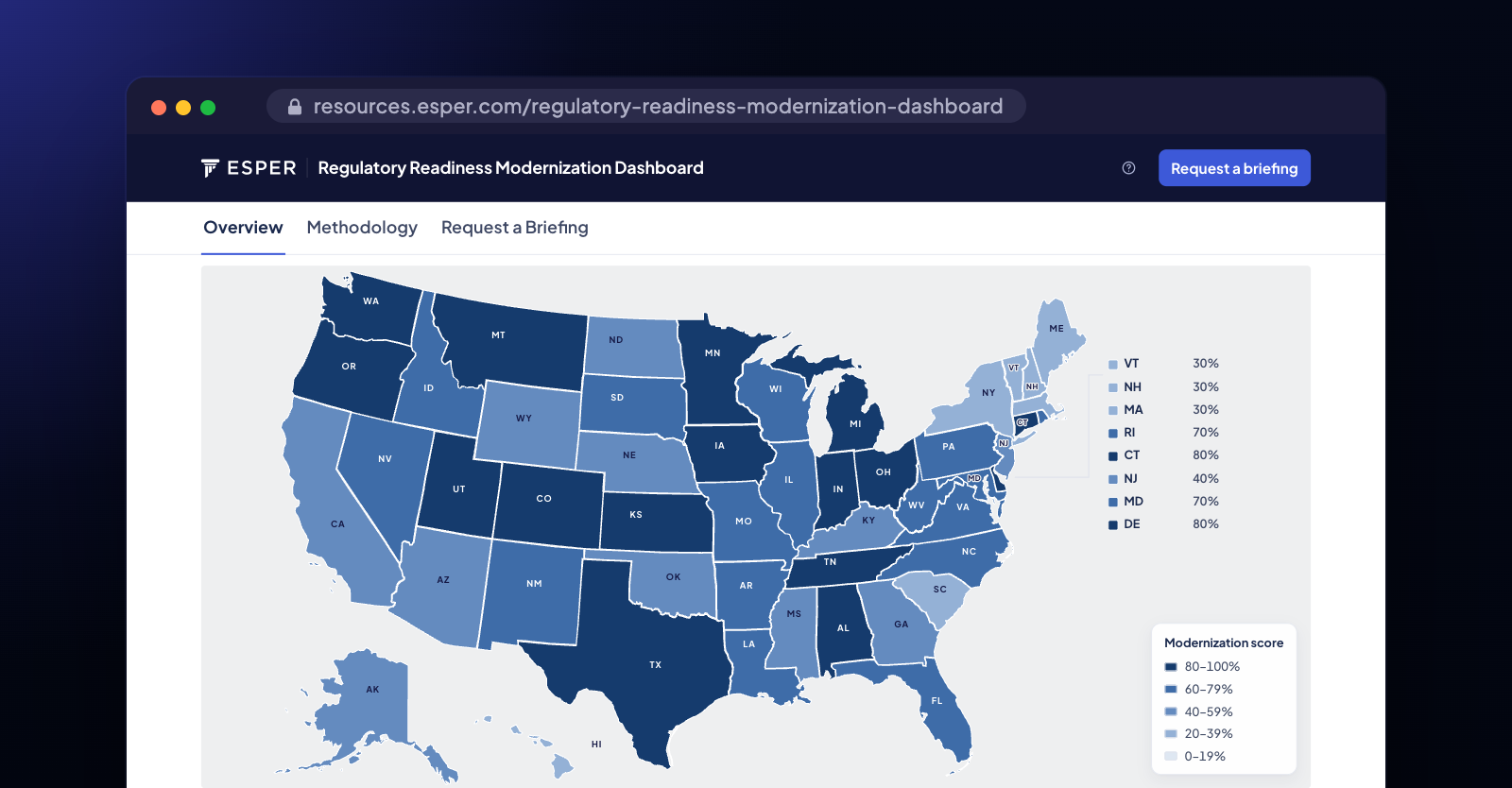
We're hosting 30 minute ADA Readiness Briefings for state agencies ahead of the 2027 deadline. Our team will walk through what your agency needs to do and share how other states are approaching it.
Reserve your briefing here or email sales@esper.com

.png)