.png)

One home for
every policy
While regulations govern the public, policies govern the government. With Esper, the policy your staff finds is the policy that's actually in force — current, approved, and the same one everyone else is working from.
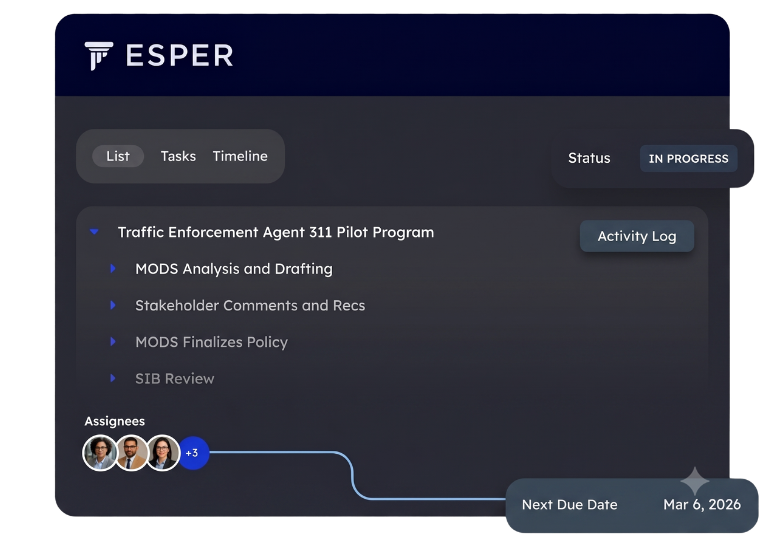
Collaborative drafting with tracked edits
Approval workflows with multi-stakeholder sign-off
Digital acknowledgement and adoption tracking
Policy renewal scheduling and compliance alerts
Centralized repository accessible to all staff
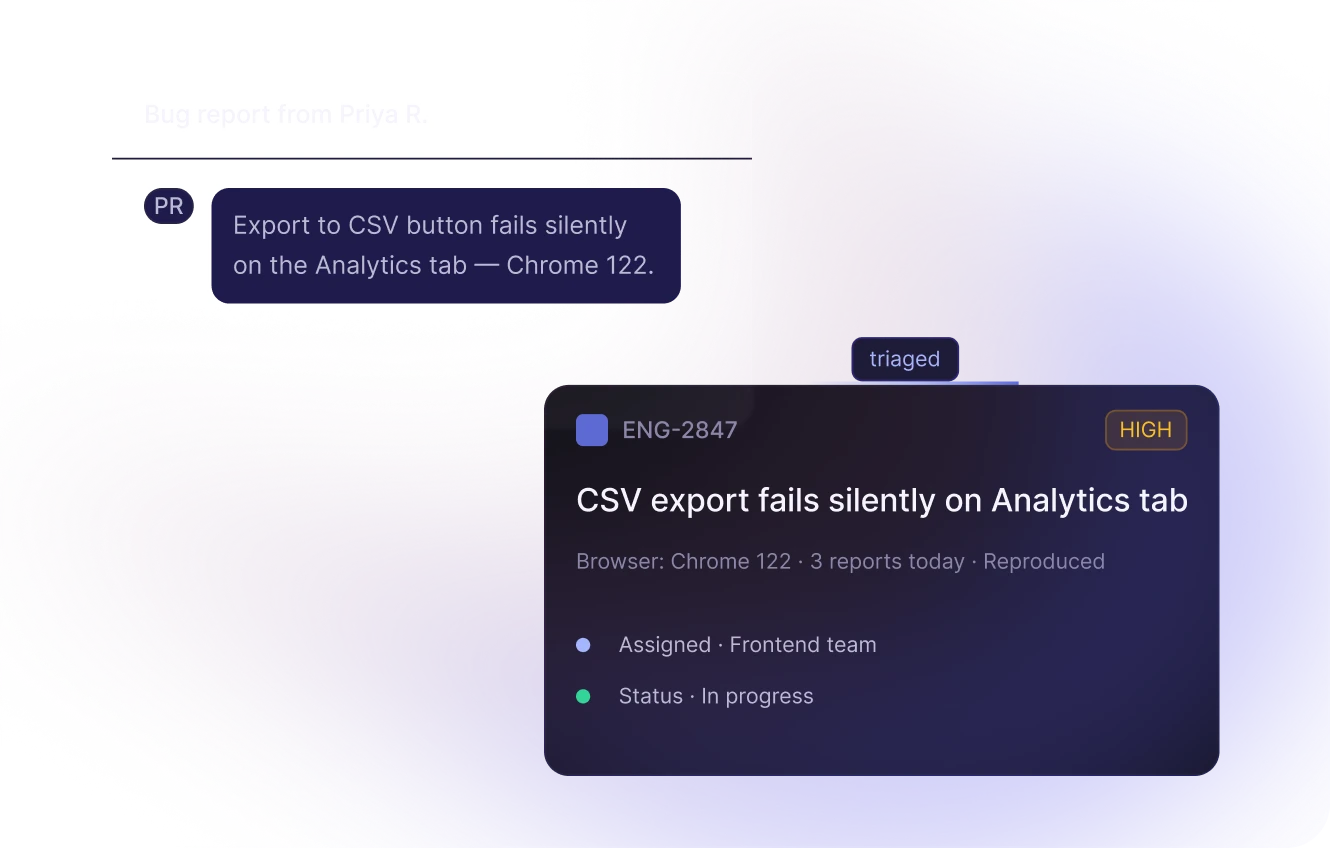
AI-powered search across your full policy library
.png)
.webp)
Purpose-built and proven for government agencies

SOC 2 Compliant
Designed around government procurement, security requirements, and the non-negotiables of public-sector data handling.
.svg)
Compounds Over Time
Every workflow, every decision, every published regulation deepens the intelligence. The platform gets more valuable the longer you run it.
.svg)
Built for Complexity
Complex hierarchies, mandatory review cycles, multi-stakeholder approvals, public-facing publication — all handled natively.
Frequently Asked Questions
Esper’s Regulation & Code Management module is a platform that moves rulemaking and regulatory drafting out of disconnected tools (spreadsheets, emails, shared drives) and into a unified, auditable workflow. It supports collaborative drafting, version control, automated publishing, compliance deadlines, and AI-powered search across your regulations. Esper
Esper is primarily targeted at government agencies (state, local, regulatory bodies) that must manage, publish, and enforce rules, codes, or regulations. It helps modernize the regulatory process in a transparent, auditable fashion.
Some of the core features include:
- Collaborative drafting with versioning and redlines
- Workflow and approval routing (assign owners, set deadlines, send reminders)
- Automated publishing in appropriate formats
- AI-enabled search to quickly find portions of regulations with citation support
- Task management and visibility into bottlenecks
Esper maintains all drafts, redlines, and versions within a single system. That ensures every change is tracked, auditable, and tied to the appropriate approval steps, so stakeholders can always see “who changed what when.”
Every rulemaking task (e.g. drafting, review, public comment, approval) is assigned an owner and due date. The system sends reminders, tracks overdue items, and makes bottlenecks visible so leadership can intervene.